
Repower Uganda: key facts
REPower Uganda gathered communities in Kampala from 20 to 24 April 2026 under the call 'Our Future, in Our Hands'. This article reports on the week and the demands for a people-centred energy future.
- Type: News story
- Published: 5 May 2026
- From: CECIC Uganda, Kasese
- Programme: Just Transition
Learn more about this topic from IRENA.
Ebiseera byaffe, mu mikono gyaffe, Our Future, in Our Hands. In the final week of April 2026, these words in Luganda became more than a slogan. They became a declaration, a commitment, and the opening chapter of Uganda’s energy revolution.
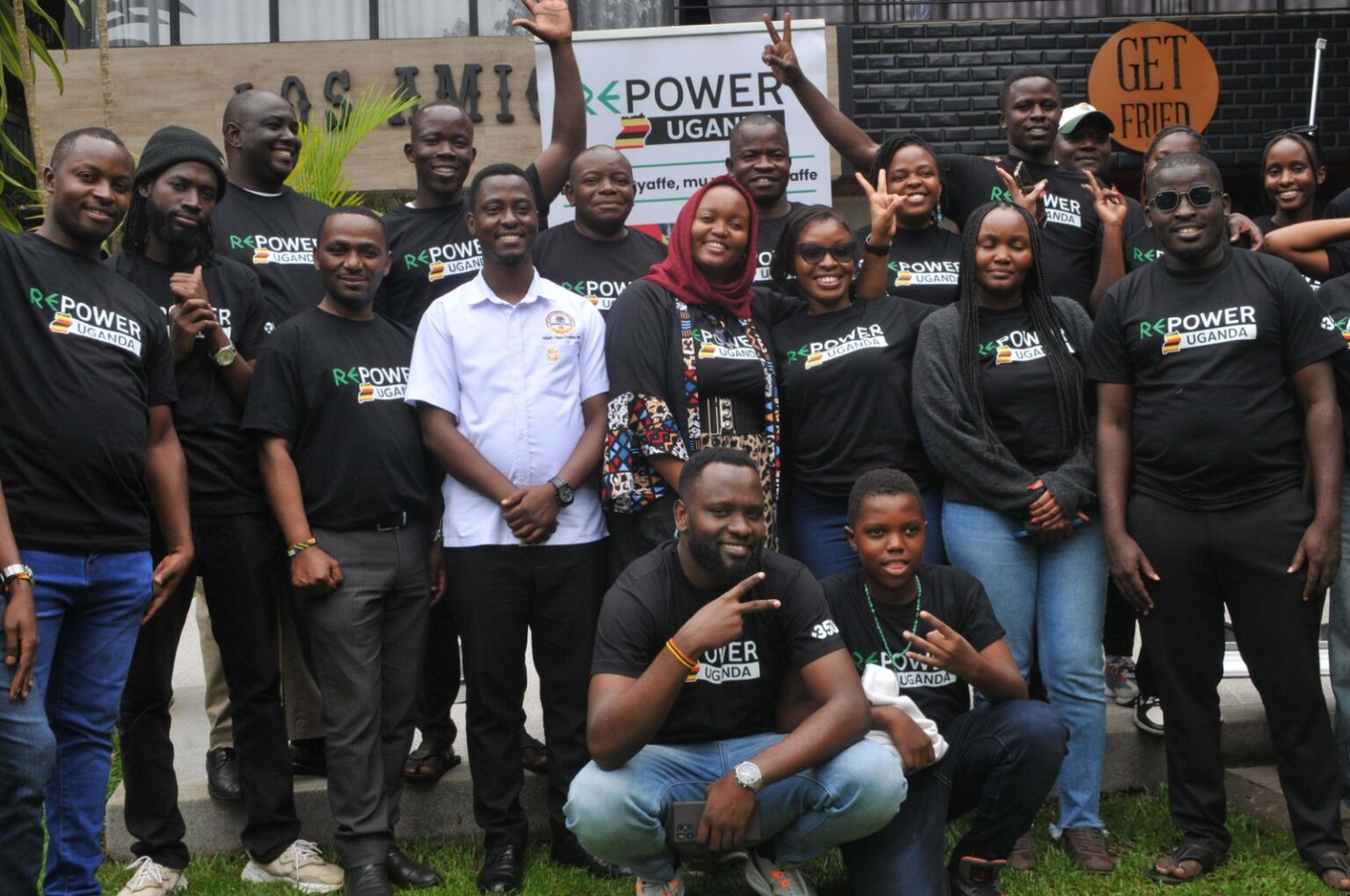
From April 20 to 24, Kampala hosted a gathering that would reshape how the nation thinks about power. Thirty representatives from civil society, government, the private sector, and grassroots communities met not to debate energy policy in abstract terms, but to design it together. The result was REPower Uganda, a national pilot project that marks a fundamental departure from how Uganda has traditionally approached its energy future.
For the first time, Uganda’s energy transition was not being decided in isolated government chambers or corporate boardrooms. Instead, it emerged from the combined expertise, lived experience, and vision of a diverse coalition united by a singular conviction: that Uganda’s path to clean energy must be decentralized, community-led, and rooted in principles of justice and equity.
The timing is significant. Across East Africa, the climate crisis intensifies while energy poverty deepens. Millions of Ugandans remain without reliable access to electricity, constrained by legacy systems designed around centralized infrastructure and prohibitively high costs. The status quo has failed. REPower Uganda proposes an alternative entirely.
The initiative envisions a fundamental restructuring of Uganda’s energy landscape, built on three strategic pillars that address the interconnected challenges of affordability, reliability, and governance. The first pillar, Fiscal and Economic Relief, targets the cost barrier that locks millions out of the energy economy. Direct subsidies on electricity for low-income households, coupled with duty waivers and VAT exemptions on affordable renewable products such as solar home systems, mini-grids, and other decentralized solutions would reduce the cost of living while stimulating the private sector growth necessary for sustained expansion.
The second pillar, Access and Grid Stability, moves beyond the limited ambition of mere connection to the deeper goal of quality service. By championing productive use of energy, REPower Uganda aims to power local value-addition and agro-processing, unlocking economic opportunity in rural communities. Simultaneously, decentralized renewable systems would offload pressure from an overburdened national grid, reducing the chronic blackouts and power fluctuations that plague both rural and peri-urban Uganda.
The third pillar addresses governance itself. Recognizing that centralized mandates have failed to account for local energy needs, REPower Uganda proposes shifting oversight to regional and district authorities. This is coupled with a commitment to increase national budget allocations specifically for clean energy infrastructure and, most critically, a Public Participation Framework that moves beyond tokenistic community consultations to genuine co-design of energy policy.
What distinguishes REPower Uganda from previous energy initiatives is not merely its strategic vision, but the process through which that vision was forged. The five-day workshop in Kampala was structured deliberately, moving through three distinct phases designed to build not just consensus, but collective ownership.
In the opening days, participants grounded themselves in the history and practice of campaign organizing. Using design tools facilitated by 350.org, the diverse representatives co-created a unified campaign strategy rooted in local expertise rather than imported frameworks. This foundational work gave rise to three formalized Communities of Practice, each tasked with a distinct function in the REPower movement.
The Comms and Storytelling CoP, described internally as “the heart,” took on the responsibility of narrative transformation. By December 2026, this working group aims to mobilize 20,000 advocates through strategic storytelling, social media campaigns, and community-led communications that bridge the gap between technical data and public action. The Advocacy and Lobbying CoP, serving as “the hands,” focuses on direct engagement with policymakers, MPs, and parliamentary committees, translating evidence into policy and budgets that accelerate decentralized renewable energy expansion. The Research and Knowledge CoP, or “the head,” commits to generating the evidence base that will sustain five years of advocacy, producing technical briefs, identifying policy gaps, and maintaining an updated knowledge repository.
Significantly, the workshop did not proceed in isolation from government. By mid-week, the emerging strategy was presented to government stakeholders and other key actors, creating space for genuine dialogue on the barriers and opportunities that define Uganda’s energy landscape. A panel discussion on radical collaboration brought together representatives from the Ministry of Finance, Ministry of Water and Climate, international organizations like Oxfam, and grassroots networks to excavate the structural obstacles that have slowed decentralized renewable energy adoption across Uganda and the broader African continent.
The workshop also seized the symbolic moment of Earth Day to screen a documentary exploring how REPower Uganda could create synergies with existing renewable energy projects already underway across the country, ensuring that this new initiative would build upon rather than duplicate existing efforts.
The final two days crystallized the emerging vision into concrete action. Working groups developed detailed 8-month roadmaps extending through December 2026, translating strategic goals into specific activities with assigned leads and timelines. A representative of the Ministry of Energy delivered a keynote address, signaling government recognition of REPower Uganda’s vital role in the country’s energy transition and outlining potential areas of collaboration. Perhaps most powerfully, local community leaders offered grounded testimonies about why energy sovereignty matters and how the abstract goal of renewable energy access translates into the concrete ability for a farmer to power irrigation systems, for a health clinic to operate reliably, for a student to study after dark.
On the final day, the campaign was officially launched under its Luganda banner, a deliberate choice to center the initiative in Ugandan language and culture. The proclamation was not ceremonial alone; it marked the formal inauguration of a structure designed for sustained implementation.
The concrete roadmap that emerged encompasses ambitious activity across all three working groups through the end of 2026. The Advocacy and Lobbying group will convene multi-stakeholder breakfast meetings in May to introduce REPower Uganda and identify collaboration opportunities. Throughout the year, they will organize at least four community barazas, which are traditional community meetings, to engage local leaders in shifting the national energy narrative. The communications apparatus will expand significantly, with three media trainings, three social media campaigns, and two radio talk shows planned to improve DRE reporting and documentation. Two regional clean energy festivals, scheduled for June, August, and December, will create visible, celebratory spaces for energy transition. Four research publications will be disseminated to directly influence policy and budget processes.
The Research and Knowledge working group will conduct its inception meeting and needs assessment in May, followed by the dissemination of research findings at a G77 press conference and budget reading. Community renewable energy knowledge hubs will launch in July, while participation in the Africa Climate Summit in September and Renewable Energy Conferences in October will ensure Uganda’s voice is heard in continental energy discussions.
CECIC’s role within this architecture deserves particular attention, as the organization serves as a co-lead of the Storytelling and Communications working group alongside partner organizations. This is not a peripheral function. In a context where most Ugandans have not yet encountered compelling evidence that decentralized renewable energy offers genuine affordability and reliability, the work of strategic communications becomes transformative. CECIC is charged with equipping partner organizations with the tools to produce accurate, high-quality DRE reporting. The organization will develop social media toolkits, press releases, videos, and visual materials designed to shift the national conversation on energy. Perhaps most ambitiously, CECIC will help mobilize and coordinate 20,000 energy advocates by drawing them into the movement through stories that demonstrate how renewable energy transitions are already improving lives in their own communities and regions.
This emphasis on narrative and communication reflects a sophisticated understanding of how social movements succeed. Data alone does not shift public opinion or political will. Neither does aspiration without concrete pathways. What transforms systems is the combination of rigorous evidence with stories that make that evidence emotionally resonant and locally relevant. By positioning communications not as a peripheral awareness function but as a central pillar of the REPower Uganda movement, the initiative acknowledges that the energy transition is ultimately won or lost in the realm of public narrative and collective imagination.
The political context makes this work both more urgent and more challenging. Uganda, like many African nations, has historically been subject to energy decisions made in service of international capital and external agendas. The Sovereignty Bill of 2026, referenced in the REPower tactical roadmap, represents a new assertion of national ownership over energy resources, but one that risks being used to justify fossil fuel expansion unless countervailing forces articulate a compelling alternative vision. REPower Uganda provides precisely that alternative, grounded in the conviction that energy sovereignty is only meaningful if it translates into genuine access, affordability, and community control.
The launch also reflects important lessons from energy transition efforts across Africa and the Global South. Centralized renewable projects, while technologically impressive, often fail to reach the poorest and most marginalized communities, precisely those who suffer most acutely from energy poverty. Decentralized renewable systems rooted in mini-grids, solar home systems, and community-scale installations can leapfrog the need for expensive grid infrastructure while empowering local economic activity. But decentralized systems only succeed when they are coupled with the right fiscal framework, the right governance structures, and the right communications ecosystem. REPower Uganda addresses all three simultaneously.
The initiative also benefits from its participation in a broader Pan-African movement. REPower Uganda is a localization of REPower Afrika, the continental campaign coordinated by organizations including PIE, 350.org, and the AfrikaVuka Network. This means that Ugandan advocates are not working in isolation but as part of a coordinated effort spanning the continent, capable of leveraging shared research, coordinating messaging, and amplifying advocacy voices through continental forums including the UNFCCC and the African Union.
As the initiative moves into its implementation phase, attention will focus on whether the coalition can maintain the unity and momentum established in Kampala. Energy transitions are contested because they involve real redistributions of power and resources. Legacy fuel interests have institutional advantage and financial resources. Implementation will require sustained organizational discipline, consistent messaging, and the ability to translate enthusiasm into concrete political and economic outcomes.
Yet the REPower Uganda launch suggests grounds for cautious optimism. The diversity of the coalition spanning government and civil society, urban and rural representatives, youth and elders, environmental advocates and economic development practitioners reflects a genuine convergence around a shared vision. The explicit commitment to accountability, demonstrated through the detailed roadmaps and assigned responsibilities, suggests this is not merely symbolic consensus-building. And the decision to place communications and storytelling at the center of strategy reflects a sophisticated understanding that energy transitions ultimately require not just technical solutions but cultural and political transformation.
Over the coming eight months, the work of REPower Uganda will be visible across Uganda in radio talk shows and social media campaigns, in community meetings and parliamentary corridors, in research publications and energy festivals. Whether this work succeeds in creating the “narrative shift” from fossil fuel dependence to renewable energy embrace will help determine whether Uganda’s energy transition remains a technical conversation among elites or becomes a genuine national movement rooted in communities themselves.
What is certain is that Uganda has now explicitly chosen a different path. The energy future will be decentralized, community-first, and rooted in the principles of justice and equity. Whether the nation will successfully walk this path depends on the sustained commitment of organizations like CECIC and the broader coalition, and on the millions of Ugandans who will ultimately decide whether this vision becomes their reality.
For the complete workshop report and to engage with REPower Uganda, visit the full documentation and connect with CECIC and partner organizations. Media coverage of the launch is available through outlets including Kazi Njema News, The Buzz Nation, Showbiz Uganda, Ankole Times, and Xclusive Uganda.
REPower Uganda was made possible through the collaboration of PIE, 350.org, AfrikaVuka Network, Global Clean Energy Network, and local partners including CECIC, CERAI, Nature Talk Africa, Y4N Uganda, WOGEM, ORRA, YCED, ULHGG, USEA, CAN UG, OXFAM UG, ACL, and AJTN.
Ebiseera byaffe, mu mikono gyaffe, Our Future, in Our Hands.
Partner with CECIC, sign our petition or get the Eco CITIZEN newsletter.