Wildlife Conservation
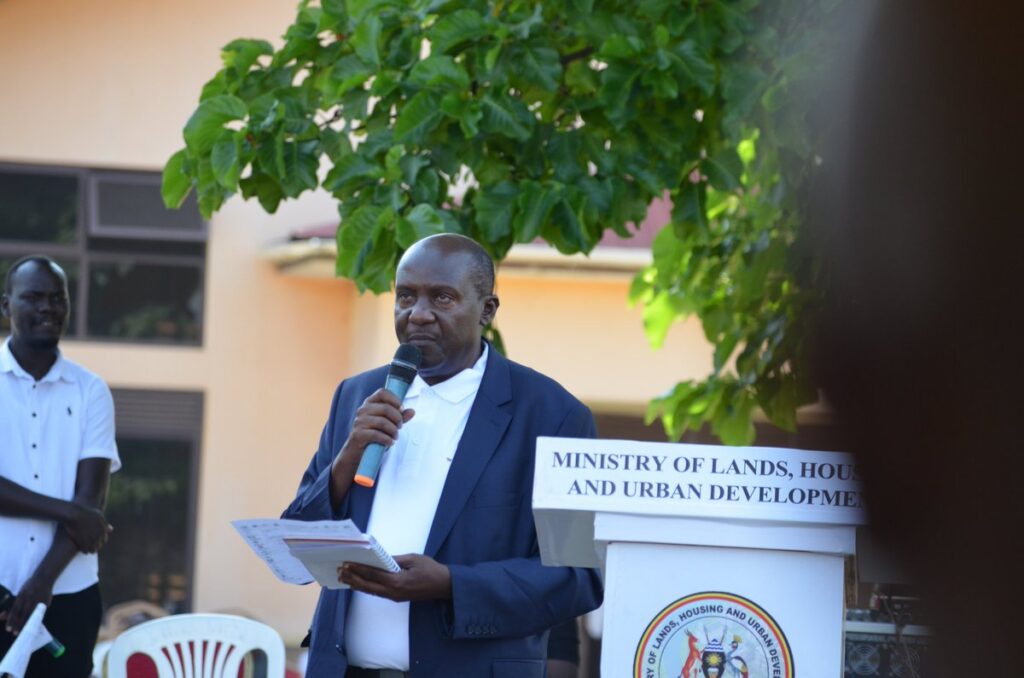
In August 2026, the Ministry of Lands, Housing and Urban Development, working alongside local governments and civil society partners, launched the National Land Awareness Week campaign in Uganda’s Rwenzori region, with Kasese at the centre of the activities. The campaign is designed to protect vulnerable landholders, formalise land documentation, provide free legal and advisory services, and help residents reclaim land acquired through fraud. For a district where land disputes have simmered for years, the timing could hardly be more pointed.
It is worth clarifying one detail up front. National records place this Rwenzori and Kasese edition as the 10th annual National Land Awareness Week, not the 9th. The 9th edition was held the previous year in Mbale City, serving the Bugisu and Sebei subregions. The confusion is understandable, since the campaign travels to a different part of the country each year under the same banner and the same recurring theme: “Promoting Land Rights and Sustainable Land Use for Inclusive and Sustainable Development.” What has stayed constant across editions is the underlying mission, which is to use a dedicated week of coordinated activity to push land governance reform down to the community level in regions where land conflict is most acute.
Kasese qualifies on that count. Just weeks before the campaign arrived, more than 3,500 residents in the district were reported to be camped outside government offices, demanding resolution of land ownership disputes that had dragged on for years. Their frustration had been building since May 2025, when State Minister for Lands Sam Mayanja directed the Resident District Commissioner to coordinate the opening of disputed boundaries and the issuance of titles within three months. Progress since then has been slow. Only a handful of land parcels have had their coordinates recorded, the transfer of a key deputy RDC disrupted continuity on the ground, and several contested areas remain tied up in court litigation. Claimant leader Grace Biira captured the mood bluntly, telling reporters, “It’s disappointing. We have camped here for three months, yet we are seeing nothing,” and warning that residents were prepared to escalate their demonstrations if action did not follow.
It is against this backdrop that Land Awareness Week’s arrival in Kasese carries real weight. The campaign’s stated objectives for the Rwenzori region are to strengthen community capacity to participate in land governance, disseminate information on Uganda’s land policy and legal frameworks, build public understanding of sustainable land management, and document challenges specific to the region that can feed into future policy reviews. A capstone output, referred to as the “LAW 2026 Memorandum and Policy Asks,” is expected to compile findings and recommendations from the week for submission to government.
The campaign draws in a wide coalition beyond the lead ministry, including the Uganda Land Commission, the Uganda National Land Information System, the National Forestry Authority, the Uganda Wildlife Authority, the National Environmental Management Authority, the Ministry of Water and Environment, the Ministry of Energy and Mineral Development, the Courts of Judicature, and civil society organisations such as PELUM Uganda. That breadth reflects how tangled Rwenzori’s land questions have become, touching not only ordinary ownership and boundary disputes but also protected forest and wildlife land, mineral areas, and water catchments, all of which intersect with community land claims in a mountainous, densely settled district like Kasese.
On the ground, the week’s programme has combined practical service delivery with public outreach. Mobile legal aid clinics and alternative dispute resolution sessions have been organised to give residents direct access to advice on ownership, succession, and boundary questions without the cost of formal litigation. District Land Board orientations have aimed to strengthen the institutions residents rely on to register and adjudicate claims. Community dialogues have brought together local leaders, cultural institutions, and residents to surface grievances that rarely make it into formal channels. The campaign has also leaned on cultural and mass media tools that have become a hallmark of the initiative nationally, including music, dance and drama performances, poetry exhibitions, radio and television programming, and social media outreach, to carry land rights messaging beyond government offices and into everyday community life. Tree planting activities have tied the week’s focus on land rights to broader environmental stewardship, a natural pairing in a region shaped by the Rwenzori mountains and its forest reserves.
Echoes of the previous edition’s emphasis are visible here too. Organisers elsewhere have stressed that land dialogues must deliberately include groups often left out of decision making, such as persons with disabilities, widows, and orphans, since land underpins not just livelihoods but identity and intergenerational equity.
In Kasese specifically, the national campaign lands on ground that local civil society has already been tilling. The Center for Citizens Conserving Environment & Management (CECIC), a Kasese based organisation, has spent the past year running the Land in Our Names (LION) project, launched in July 2025 to support communities affected by land grabs and exploitative land based investments across the district’s copper and cobalt mining zones. LION trains community monitors to document land injustices through video, audio, and photography, pushes for open, plain language contracts in extractive deals, and works with local lawyers to file legal complaints on behalf of affected communities, including a case in Bugoye Subcounty. The project also runs land rights dialogues and negotiations led by women, and produces the “Voices of the Valley” podcast series to carry displacement stories to a wider audience. CECIC has separately flagged how customary inheritance practices, the eviction of widows, and gaps in joint land registration leave women, who make up over 70 percent of Uganda’s agricultural labour force, especially exposed when land disputes turn adversarial, and it has called for expanded legal aid services and paralegal networks to close that gap. Land Awareness Week’s arrival in Kasese effectively puts a national platform and government resourcing behind groundwork that CECIC and similar community organisations had already been laying: legal empowerment, documentation, and a push to bring women and marginalised groups into land governance conversations they are too often left out of.
For Kasese, the real test will be whether a week of dialogues, clinics, and memoranda translates into the tangible outcome residents have been waiting for since 2025: surveyed boundaries, issued titles, and resolved disputes. The campaign has given the district a platform and a spotlight. What happens after the tents come down will determine whether it also delivers results.