Think about how many batteries have passed through your hands this year. Phone batteries, solar lantern batteries, the backup pack you keep charged for when the power goes out. Now think about what happened to the last one that finally gave up on you. If you’re like most people, you honestly don’t know. It went in a drawer, or a bin, or nowhere in particular.
That question, the one almost nobody stops to ask, is where our new documentary begins. It’s called Batteries After Life, and it’s the flagship film from the Centre for Citizens Conserving Environment & Management (CECIC). This month we opened a call for proposals to find the filmmaker who will help us tell this story properly, and we wanted to explain why it matters so much to us.
A crisis hiding in plain sight
Uganda’s appetite for electronics and off-grid solar power has grown fast, and a waste problem has grown right alongside it, mostly unnoticed. The country generates tens of millions of kilograms of electronic and battery waste every year, and only a small fraction of that is ever formally collected or safely recycled. The rest gets burned, buried, or simply dumped, quietly leaking heavy metals and toxins into the soil, water, and air of the communities nearby.
Many of the batteries at the centre of this problem aren’t exotic at all. They’re the ordinary lead-acid batteries inside solar home systems, the same technology that has finally brought electricity to millions of rural households. Researchers studying solar waste across sub-Saharan Africa found that a single improperly recycled solar battery can release more than 3.5 kilograms of lead into the surrounding environment, over one hundred times a lethal dose. Because these batteries tend to fail within a year or two, an informal recycling trade has grown up to meet the demand: technicians crushing battery cells and melting lead over open cooking stoves by hand, often right in the middle of residential neighbourhoods. In Senegal, one such operation was linked to the deaths of eighteen children from lead poisoning. UNICEF estimates that roughly 800 million children worldwide are carrying elevated lead levels in their blood right now, and researchers put the economic cost of childhood lead exposure across Africa at more than $134 billion a year in lost human potential.
Numbers like that are hard to hold onto. That’s exactly why this needs to be a film and not just a report.
Why we’re starting in Kasese
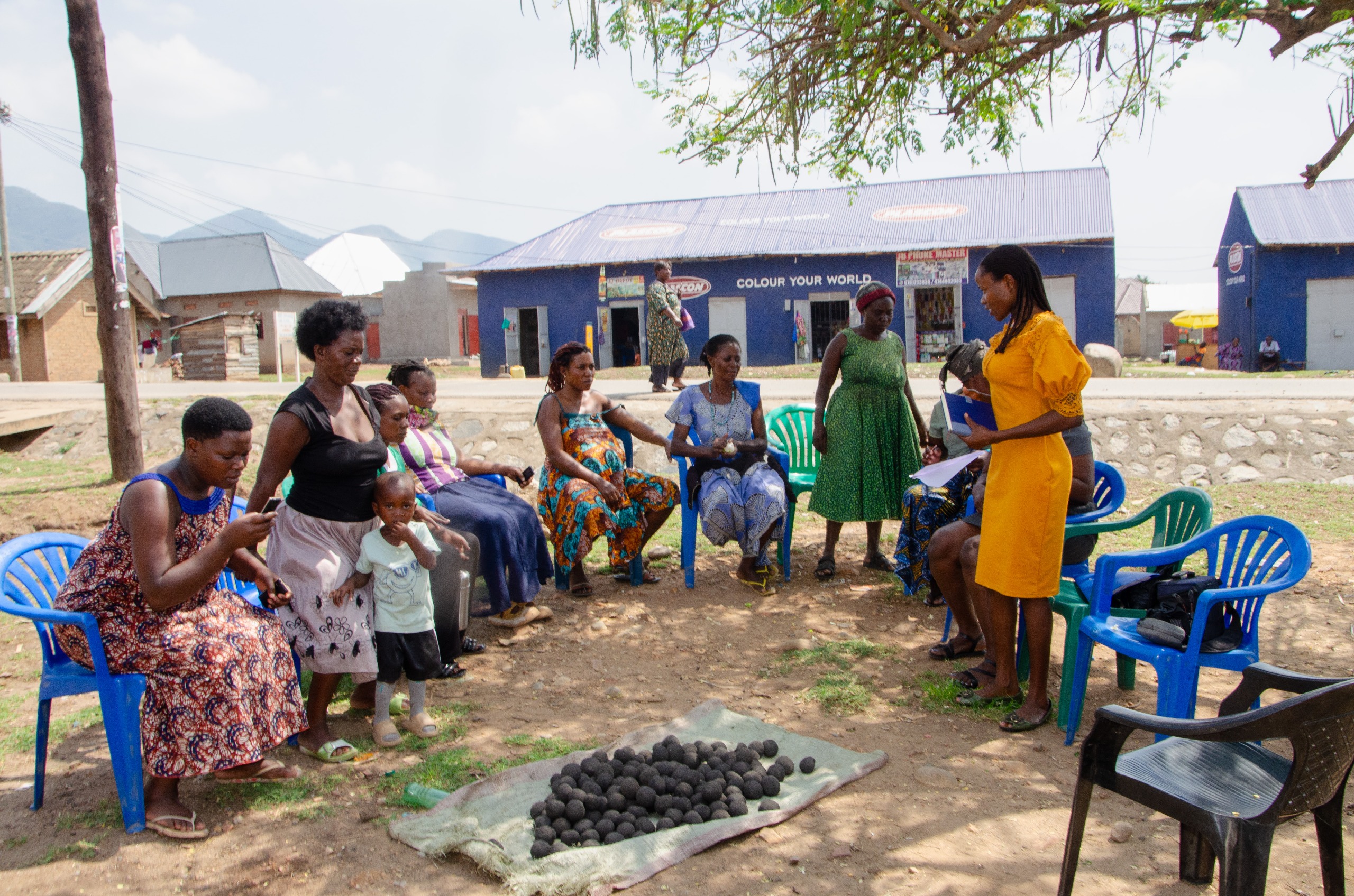
CECIC is based in Kasese District, a mining and border town in Uganda’s Rwenzori region that already carries a heavy environmental load from extractive industry. It’s also a place where solar power and battery-powered devices have spread quickly, with almost no plan for what happens once those batteries stop working. Industrial pollution, rising battery use, and next to no formal disposal infrastructure: that combination tends to stay invisible until someone decides to look closely and insists that other people look too.
That’s what Batteries After Life is meant to do. Instead of treating battery waste as a statistic, we want the film to follow it all the way to its source: the households quietly discarding dead batteries, the workers taking them apart by hand, the soil and water absorbing what’s left over, and the leaders and institutions who are either responding to this or looking away from it. It’s a Kasese story first, but the questions it raises don’t stay local. They follow the clean energy transition everywhere it’s outpacing the systems meant to manage its waste.
Told by the people living it, not around them
This project grows out of CECIC’s broader work under our Batteries and Renewable Energy Solutions programme, which promotes safer battery and renewable energy use across the region. We want the documentary to hold two things together that don’t always sit comfortably in the same film: real investigative rigour, tracing supply chains, disposal practices, and the regulatory gaps that let all of this slide, alongside storytelling that puts the people most affected by battery waste at the centre of their own story, not at the edges of someone else’s.
Done right, a film like this doesn’t just inform people. It changes how a community understands a risk that’s been sitting in plain sight for years, and it puts pressure on the institutions that are actually in a position to fix it.
We’re looking for the person to tell it
We’ve opened a call for proposals to find an experienced video producer, documentary filmmaker, or production company to lead this project from research through final delivery: the feature film itself, a trailer, and short cutdowns for advocacy and social media. We’re looking for someone with a real track record in documentary or investigative journalism, genuine experience with community-centred storytelling, and the ability to work on the ground in Kasese District.
We’d especially love to hear from women filmmakers and from filmmakers or production companies based in the Rwenzori Region. And if this isn’t you but you know who it might be, please pass it along. That kind of word of mouth is often how the right person finds a project like this.
Full details on scope, deliverables, timeline, and how to apply are in our call for proposals. To apply, send a portfolio or showreel, an approach note, a financial proposal, your availability, and references to opportunities@cecicug.org with the subject line “Video Producer: Battery Waste Documentary.”
A dead battery is easy to throw away and forget. This film is for everyone who doesn’t get that choice.
The Centre for Citizens Conserving Environment & Management (CECIC) is a Kasese-headquartered advocacy organisation working across Uganda’s Rwenzori region to advance climate justice, natural resource governance, and community-led environmental management.