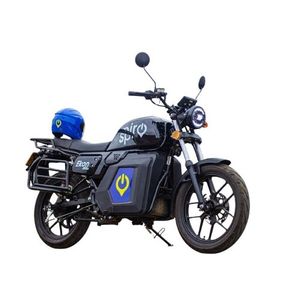
On a misty morning in the hills of Kigezi, 35-year-old bodaboda rider Moses Turyakira powers up his electric motorcycle and glides silently down the steep road to town: no engine roar, no petrol fumes, no clunky gear shifts. Just the soft hum of an electric motor and a full charge that cost him less than a liter of fuel. “This bike has changed my life,” says Turyakira, who switched from a conventional motorcycle to a Zembo e-bike last year. “I save over 150,000 shillings every month. That’s school fees for my two children.” Turyakira is one of hundreds of riders in Western Uganda embracing a quiet revolution: the rise of electric bikes. Once seen as a luxury for city dwellers, e-bikes are now proving their worth on rural dirt roads, steep slopes, and remote trading routes, offering a cleaner, cheaper, and more sustainable alternative to fossil-fueled transport.
In districts like Mbarara, Bushenyi, Kabale, and Rukungiri, motorcycles are more than vehicles. They’re lifelines. Known locally as bodaboda, they ferry passengers, deliver goods, and connect isolated communities. But with petrol prices soaring past UGX 5,000 per liter and maintenance costs eating into daily earnings, many riders are struggling. Enter electric mobility. Companies like Zembo Uganda have introduced e-motorcycles designed for African terrain: rugged, powerful, and efficient. The Zembo Z1 features a 1.5 kW electric motor, a range of 80–100 km per charge, and a top speed of 60 km/h, more than enough for rural routes. Engineers and researchers confirm that with proper design, e-bikes can handle gradients of up to 18%, making them viable even in the mountainous Kigezi region.
One of the biggest hurdles, charging in areas with no reliable electricity, is being overcome with solar energy. In Rukungiri, a solar-powered charging station funded by the UNDP and operated by a local NGO now serves over a dozen e-bike owners. Using a 2.5 kW solar array and a 10 kWh battery bank, the station provides full charges for UGX 3,000, about half the cost of petrol for a similar trip. “We don’t depend on the grid anymore,” says station operator Grace Amanya. “Even on cloudy days, we store enough power to keep the bikes running.” Battery swapping is another innovation gaining traction. Inspired by Rwanda’s successful Ampersand model, riders can exchange a drained battery for a fully charged one in under two minutes, eliminating downtime and enabling 24/7 operations.
While the upfront cost of an e-bike (around $2,000) is nearly double that of a used motorcycle, the long-term savings are undeniable. A recent study found that e-bike owners save an average of UGX 180,000 ($50) per month on fuel and maintenance. Over five years, this adds up to over $3,000 in savings, more than enough to cover the initial price difference. “With petrol, I was spending half my income just to keep the bike running,” says Turyakira. “Now, I make the same money, but I actually keep some.” To make e-bikes more accessible, companies are offering pay-as-you-go (PAYG) financing through mobile money. Riders pay daily or weekly installments, and the bike locks remotely if payments lapse, a model that’s already proven successful in Kenya and Rwanda.
Despite the promise, e-bikes still face roadblocks, especially in policy. Uganda currently lacks clear regulations classifying e-bikes. Are they bicycles? Motorcycles? Do riders need special licenses? Without answers, local authorities are hesitant to support large-scale deployment. Import taxes also remain high. While electric vehicles are exempt from some duties, batteries and key components still face VAT and excise taxes, driving up costs. Experts are calling for a National E-Mobility Strategy that includes tax exemptions for e-bike imports, safety and performance standards, incentives for local assembly and battery recycling, and integration with renewable energy programs. “Rwanda did it. Kenya is doing it. Uganda can lead too,” says energy policy analyst Dr. Peter Tumwine. “We have the solar potential, the youth workforce, and the transport demand. All we need is political will.”
The environmental benefits are clear. Replacing one motorcycle with an e-bike cuts over one ton of CO₂ emissions per year. If 10,000 e-bikes replace petrol bikes in Western Uganda, the region could reduce emissions by 12,000 tons annually, equivalent to taking 2,500 cars off the road. When charged with solar power, e-bikes become a zero-emission transport system, aligning with Uganda’s climate commitments under the Paris Agreement. Socially, e-bikes are opening doors for women and youth. In Bushenyi, a women-led bodaboda cooperative has adopted e-bikes, citing easier handling and lower operating costs. “Men used to dominate this space,” says cooperative leader Juliet Nalubega. “But with e-bikes, we can compete. They’re safer, quieter, and we don’t have to deal with greasy engines.”
Despite progress, challenges remain. Spare parts for motors and controllers are still imported, leading to long wait times. Few local mechanics are trained to repair electrical systems. And while solar charging works, the high upfront cost of solar stations limits scalability. “There’s no point giving people e-bikes if they can’t charge them or fix them,” says mechanic David Byaruhanga in Mbarara. “We need training, spare parts, and service centers.” The future of e-bikes in Western Uganda is bright, but only with coordinated effort. Pilot programs in Mbarara and Fort Portal have shown that e-bikes are technically viable, economically beneficial, and socially accepted. Now, the focus must shift to scaling. Recommendations include establishing regional e-bike service hubs, integrating e-bike training into technical schools, launching government-backed subsidy programs, and encouraging public-private partnerships for solar charging networks.
We’re not just selling bikes,” says a Zembo representative. “We’re building an ecosystem energy, transport, jobs, and sustainability.” As Moses Turyakira parks his e-bike at the Fort Portal market, a crowd gathers. Children marvel at the silent machine. Fellow riders ask about range and charging. A vendor inquires about buying one for deliveries. “This is the future,” Turyakira tells them. “Clean, quiet, and affordable. And it’s made for Uganda.” With every silent ride up a steep hill, the electric revolution is proving that sustainable mobility isn’t just possible. It’s already here.
Partner with CECIC, sign our petition or get the Eco CITIZEN newsletter.