Think about the old electronics still sitting in your home. The phone that no longer switches on, the radio nobody got round to repairing, the solar lantern that gave up last year.
Most of us push these things into a drawer or throw them out with the rubbish, because nobody has ever told us what else to do with them. On Saturday, 31 October 2026, the Government of Uganda set out to change that. At Lavington Park in Lira City, during the fourth National Cleaning Day, it launched a nationwide campaign on how electronic waste is collected, separated, refurbished and disposed of.
We welcome this campaign. We also believe its real test begins now that the launch is over.
A launch with something to show for it
National Cleaning Day takes place across the country on the last Saturday of every month, from 7:00 am to 10:00 am, under the theme “A clean Uganda is everyone’s responsibility”. In Lira, the morning opened with a small lesson. When leaders arrived to clean Lira Main Market, the vendors had already done it.
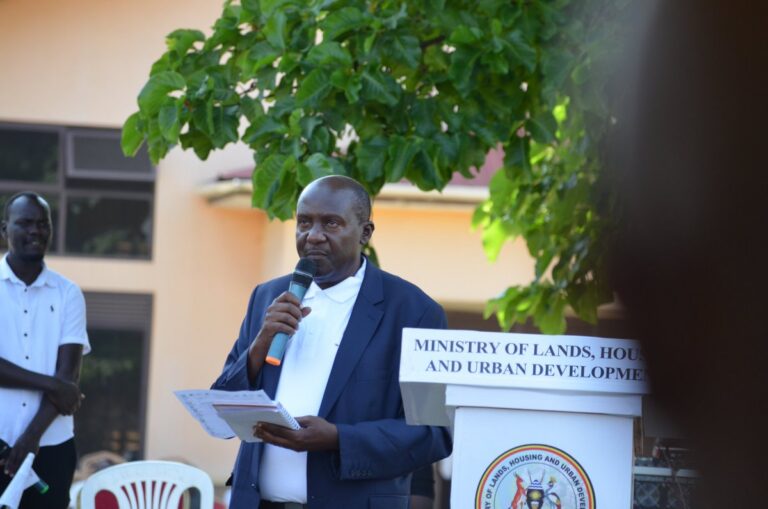
At Lavington Park, Hon. Chris Baryomunsi, the Minister of Health, represented the Prime Minister as chief guest. He warned that discarded electronics can give off harmful fumes. “It is not safe to mix this kind of waste with the others,” he said.
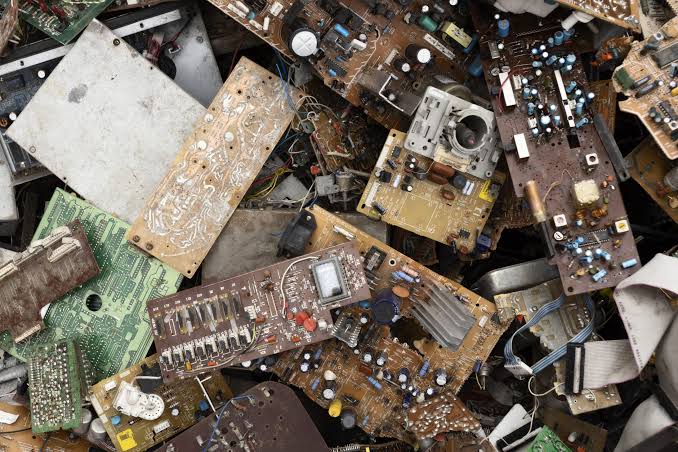
Rt. Hon. Justine Kasule Lumumba, the Minister for ICT and National Guidance, explained what the term covers. E-waste is any equipment that plugs into electricity or runs on batteries, from household appliances to the ICT equipment used in hospitals, schools and industries.
The launch also came with something practical. Under a six-month pilot that began in August 2025, the Uganda Communications Commission has set up 20 permanent collection bins nationwide and gathered more than 3,000 kilogrammes of electronic gadgets. Lira City received two such bins, which will stay at Lira University as the city’s central collection point. The government says more cities and towns will follow gradually.
Why a dead phone is not ordinary rubbish
A working phone or radio poses little risk to the person using it. The danger begins once it is broken, dumped or burned. According to the World Health Organization, unsafe recycling can release up to 1,000 different chemical substances, including lead. Open burning and heating are the most hazardous practices because of the toxic fumes they produce.
Children and pregnant women face the greatest risk. WHO links exposure to stillbirth and premature birth, reduced lung function, and problems with learning and behaviour. Some of this harm can last a lifetime.
This does not make Uganda’s repairers the problem. At Kampala’s Cornerstone Plaza, technicians keep devices in use and make technology affordable for students and low-income families. The Ministry of ICT found that the gap comes at the very end, when the remaining parts have no value and slip into general waste.
A problem bigger than three tonnes
Uganda generated about 41,000 tonnes of e-waste in 2022, or 0.9 kilogrammes per person, according to the International Telecommunication Union. Only about 200 tonnes, roughly 0.5 percent, was documented as formally collected and recycled. Globally, the share is 22.3 percent.
The pilot’s three tonnes should be read in that light. It was a test of how collection can work, and it has given the country a useful start. The job ahead is far larger.
What we want to see next
Uganda has had an e-waste policy since 2012 and guidelines promoting the 4Rs of Reduce, Repair, Reuse and Recycle since 2016. What the country needs now is a system that works in practice as well as on paper. We are calling for six things:
Reach beyond the big cities. Kasese and other towns across the Rwenzori region need collection points too, and people must be able to find them easily.
Include solar products and batteries. These items are reaching rural homes quickly and need a clear route for safe disposal.
Make producers share the cost. The ITU lists no extended producer responsibility rules for e-waste in Uganda. Companies that sell electronics should help pay for what happens when those products reach the end of their life.
Set public targets. The ITU also lists no national collection or recycling targets. Clear targets and regular reporting would let citizens judge progress.
Work with repairers. They are already the main route out of households for used devices, so they need training, protective equipment and a place to take what remains.
Build recycling at home. Much of the high-value recycling happens outside Uganda. Strengthening local capacity would keep more jobs and value in the country.
Why this matters to us in Kasese
Solar power has brought light and electricity to homes that the grid has not reached, and the Daily Monitor reported in 2024 that defunct solar equipment already forms a large part of Uganda’s e-waste. The move to clean energy should not leave communities with a new pollution problem.
We explored this in August in What Happens to a Battery After It Dies? Through our Batteries and Renewable Energy Solutions programme, we work with government agencies on the solutions, laws and guidelines needed for safe battery recycling. Our zero-waste work in Kasese Municipality is built on separating waste where it is produced, and e-waste calls for the same habit.
What you can do today
Never burn e-waste, and keep it out of your household rubbish.
Repair before you replace. A fixed device stays out of the waste stream for longer.
Store old items safely, especially leaking batteries, and keep them away from children, food and water.
Protect your data. Back up what you need, reset the device, and remove SIM and memory cards.
Use a collection point where one is available. In Lira City, that is Lira University.
Ask your local leaders how e-waste fits into your area’s waste plans and by-laws.
The vendors of Lira Main Market did not wait for anyone to clean up for them. An old phone is just as easy to push to the back of a drawer, but what happens to it next is up to all of us.
The Centre for Citizens Conserving Environment & Management (CECIC) is a Kasese-headquartered advocacy organisation working across Uganda’s Rwenzori region to advance climate justice, natural resource governance, and community-led environmental management.
Stand with communities in the Rwenzori
Partner with CECIC, sign our petition or get the Eco CITIZEN newsletter.